
Jan 23, 2026
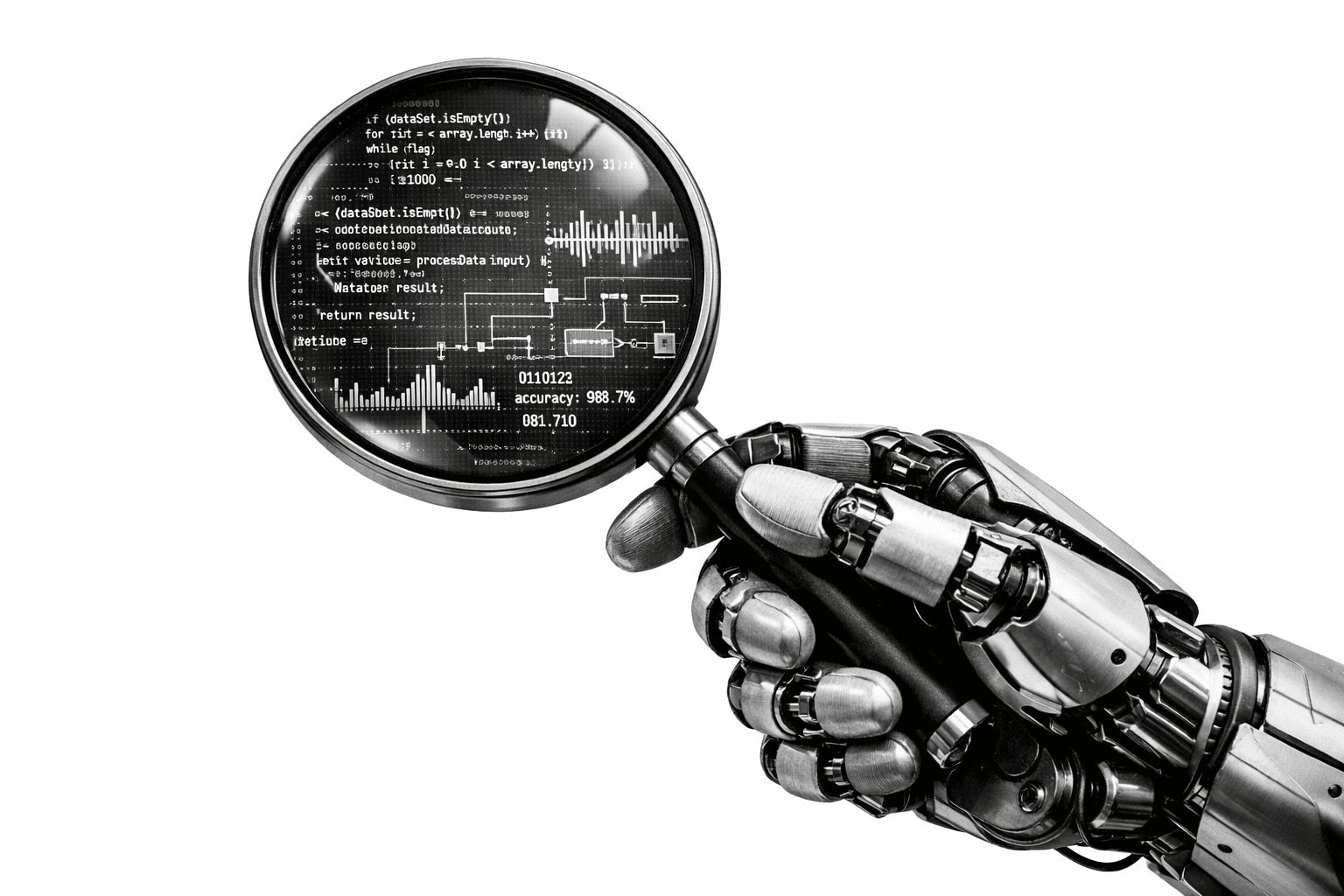
AI-Search is a search model in which artificial intelligence systems interpret questions, synthesize information, and deliver straightforward answers, instead of merely listing links. It shifts the focus of search from "finding pages" to "obtaining reliable answers."
How does AI-Search work?
AI-Search works by analyzing the user's intent and generating answers based on multiple reliable sources.
Instead of relying solely on keywords, it interprets context, meaning, and content authority.
Main features of its operation:
Semantic interpretation of the question
Synthesis of information from various sources
Selection of content deemed reliable
Direct, concise, and contextual answers
What is the difference between AI-Search and traditional search?
The main difference is that AI-Search responds, while traditional search directs.
Objective comparison:
Traditional search
Lists links
Prioritizes keywords
Depends on user clicks
AI-Search
Delivers ready answers
Prioritizes context and reliability
Reduces the need for navigation
What does AI-Search evaluate to choose a source?
AI-Search prioritizes clear, reliable, and well-structured content.
It evaluates signals that indicate whether information can be safely used in an automatic response.
Main criteria analyzed:
Clarity in defining concepts
Semantic consistency
E-E-A-T (experience, expertise, authority, and trustworthiness) of the author or the brand
Structure easy to summarize
Objective and verifiable language
How does AI-Search change the way content is produced?
AI-Search requires content designed to answer questions, not just to rank pages.
This implies:
Direct definitions right at the beginning of sections
Use of real questions as titles
Structure scannable by humans and automated systems
Fewer long paragraphs and more objective lists
Contents that follow this pattern have a higher chance of being used as a basis for automated answers.
What is the relationship between AI-Search and answer-oriented content?
AI-Search relies on content that can be reused as complete answers.
This means each section should function independently, without requiring full reading of the article.
Essential best practices:
One main idea per section
Short answer before the explanation
Neutral and informative language
Avoid ambiguities and excess opinion
How can companies adapt to AI-Search?
Companies need to structure content to be understood, summarized, and cited by AI systems.
Practical checklist:
Create pages focused on real market questions
Demonstrate practical experience on the topic
Maintain consistency in concepts throughout the site
Platforms like Ranqia help companies understand how their content is used by AI systems and where there are opportunities for improvement.
Frequently Asked Questions (FAQ)
Does AI-Search completely replace traditional search engines?
No. It complements traditional search by providing direct answers to specific questions.
Does AI-Search use any content available on the internet?
No. It prioritizes structured, reliable, and semantically clear content.
Do long contents work in AI-Search?
Yes, as long as they are well organized and allow for the extraction of specific answers.
Are keywords still important in AI-Search?
Yes, but context and meaning weigh more than the repetition of terms.
Can companies control if they will be cited by AI-Search?
No directly, but they can work with strategies that increase their chances of being cited.
Conclusion
AI-Search represents a structural change in the way information is found and consumed.
Instead of competing solely for clicks, brands begin to compete for trust, clarity, and responsiveness.
Those who understand this logic and adapt their content are better positioned in an ecosystem increasingly driven by artificial intelligence.